
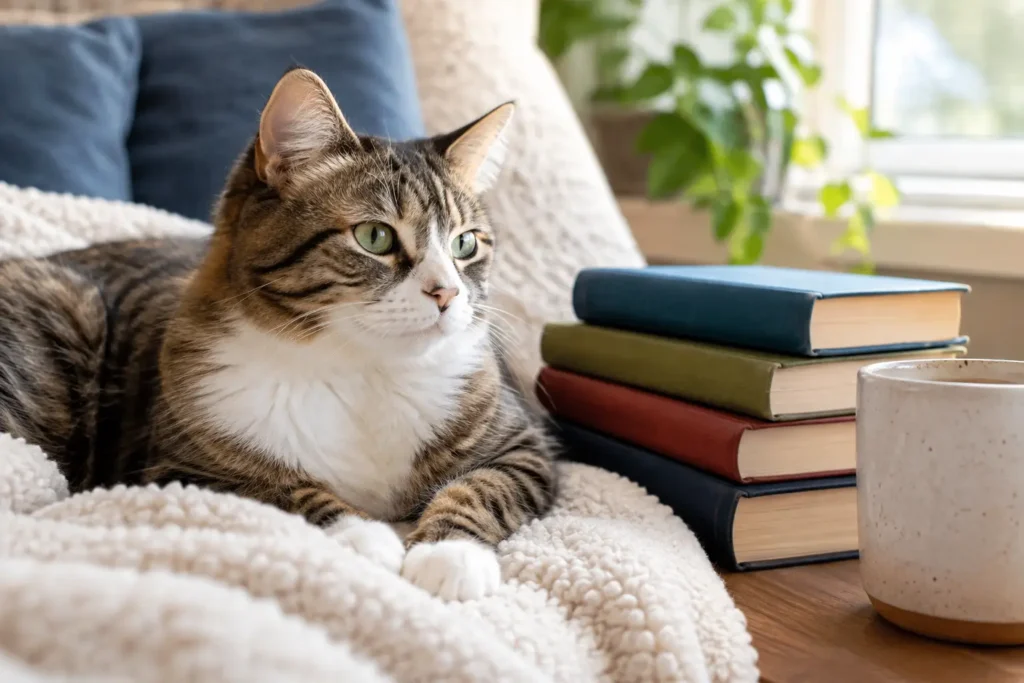
Cat Cozy Mystery Books Worth Curling Up With
A cat asleep on the windowsill is pleasant. A cat staring at the locked study door as though it knows exactly who put the body there is considerably more useful. That is the particular pleasure of cat cosy mystery books: a tidy dose of danger, a clever puzzle, and a feline companion who may or may not be judging everyone in the room.
For readers who like a mystery without graphic nastiness, cat cosies offer a delightful bargain. You get suspects, secrets, suspicious alibis and a proper ending, often in a village, bookshop, café or quiet town where the scones are fresh and the gossip travels faster than the local constable. The cat adds charm, mischief and, on occasion, the only sensible reaction to human behaviour.
Why Cat Cosy Mystery Books Are So Hard to Resist
A good cosy mystery has rules, even when its amateur sleuth is breaking them. The crime matters. The clues are there if you look closely. The culprit is not pulled from thin air in the final chapter like a rabbit from a slightly dodgy hat. And after a few twists, the reader is rewarded with order restored.
Add a cat and the story gains another layer. Cats are naturally mysterious creatures. They vanish into cupboards at the wrong moment, sit beside the one person nobody trusts, steal a scrap of paper from a desk, or refuse to enter a room for reasons they decline to explain. A dog may fetch the clue with a wagging tail. A cat will knock it under the sofa and make you work for it.
The best feline sidekicks are more than decorative fur on the cover. They reveal character. How a suspect treats a nervous rescue cat can tell you plenty. So can an overly eager attempt to win the animal’s affection. Readers often grow attached to the cat, but the animal should serve the mystery rather than solve every case by meowing at the murderer. Even fictional cats deserve better working conditions than that.
What Makes a Cat Mystery Feel Cosy Rather Than Grim?
Cosy does not mean silly, and it certainly does not mean the mystery has no bite. A murder is still a serious affair. The difference is in how the story handles it. The focus sits on the puzzle, the people affected, and the amateur detective piecing together what went wrong.
Violence usually happens off the page. Romance, if included, stays light. The pleasure comes from observation: who said what, who arrived late, which neighbour suddenly has a very convenient new story, and why the cat has taken such an interest in the potting shed.
Setting matters enormously. A charming village, coastal town or close-knit neighbourhood creates a natural pool of suspects. Everyone knows everyone, or thinks they do. Old grudges linger. Local traditions conceal awkward history. The annual flower show, church fete or charity dinner becomes an ideal place for both cheerful conversation and a first-rate motive.
For many readers, this balance is exactly right. You can enjoy the excitement of a crime story without carrying bleak images around for the rest of the evening. Put the kettle on, settle into a decent chair and let somebody else deal with the alarming discovery behind the garden shed.
Choosing Cat Cosy Mystery Books You Will Actually Finish
Not every book with whiskers on the cover delivers the same reading experience. Some are gentle and humorous. Others lean more heavily into detective work. Some feature an ordinary cat with excellent instincts, while others give the feline an almost supernatural role. Neither approach is wrong. It depends on what you enjoy.
If you prefer a traditional whodunnit, look for stories with a strong central question and a clear trail of clues. The sleuth may be a librarian, café owner, antique dealer, retired teacher or newcomer to town, but their investigation should feel earned. Coincidences can start a case. They should not solve it.
If character is your main attraction, choose a series with a continuing community. Familiar faces make each new mystery more satisfying: the prickly neighbour, the local police officer who is not quite as sceptical as they pretend, the best friend with an unfortunate talent for overhearing things. A recurring cat can become part of that comfort too, particularly when it has strong views about lap availability and dinner times.
Readers looking for a quick escape may prefer novellas or shorter mysteries. A compact book can still offer a fair puzzle, memorable characters and a satisfying reveal. In fact, a shorter format often suits cosy fiction beautifully. There is no need to spend 500 pages wandering through everyone’s childhood trauma before finding out who pinched the silver candlesticks.
Before beginning a new series, consider these practical questions: Do you want one mystery per book, or a continuing storyline? Do you like recipes, craft details and village life between clues, or would you rather get to the investigation quickly? And are you happy with a talking or psychic cat, or do you prefer your feline detectives strictly paws-on-the-ground?
The Clues Are Better When the Cat Cannot Explain Them
There is a trick to writing and reading a cat mystery well. The cat can trigger suspicion, uncover an object or lead the sleuth somewhere unexpected. But people must still do the thinking.
That human effort is where the satisfaction lies. A protagonist notices the cat hiding beneath a chair during a visit from one particular guest. Later, they connect that behaviour with a faint scent on a coat, a missing key and a lie told at precisely the wrong time. The cat opens a door. The sleuth walks through it.
This also makes the books ideal for readers who enjoy solving a mystery alongside the characters. You can pause after a chapter and weigh the evidence yourself. Was the gardener genuinely distressed? Why did the widow change the subject when the missing brooch was mentioned? And is the tabby sitting on that ledger because it is warm, or because it contains something nobody was meant to see?
A fair-play mystery gives you a chance. You may not beat the detective to the answer, but you should recognise the path once the solution is revealed. That lovely click of understanding is one reason cosy mysteries remain such reliable companions.
Start a Series, Then Make Yourself at Home
A standalone cat cosy can be a treat, but a series offers a different pleasure. Returning to the same setting feels like visiting a favourite holiday town where someone inconveniently keeps turning up dead. You know where to find the good coffee, which local is likely to exaggerate, and which cat will inspect every new visitor with proper suspicion.
Series fiction also lets relationships develop at a believable pace. An amateur sleuth can gain confidence. A wary friendship with a detective can thaw. A rescued cat can settle into its new home and become indispensable, mostly by occupying the only chair with decent light.
There is one trade-off. Longer series can gather a fair bit of history. If you dislike feeling that you have arrived late to the party, begin with the first book. If each title has its own complete mystery, though, you can often start anywhere and work backwards if the characters win you over.
A Fine Mystery Needs More Than a Cute Cover
The cover may feature bright eyes, elegant paws and a suspiciously innocent expression, but the real test is inside. Look for a sleuth worth following, a setting with personality, suspects who have motives beyond being generally unpleasant, and an ending that makes sense.
The cat should add warmth and intrigue, not distract from the case. The crime should create genuine questions, not merely interrupt afternoon tea. Above all, the final pages should leave you pleased you spent your time there.
The finest cat cosy mystery books understand a simple truth: comfort and suspense are not opposites. A warm room, a clever puzzle and a cat who knows more than it is saying can make for a thoroughly satisfying evening. Just do not be surprised if your own cat watches you read with an expression that suggests it could solve the case faster.
Share